
HOW TO PREPARE BEFORE AN ACTION OR PROTEST

Here are some things you can do in advance to prepare for a protest or action to ensure you, and your community will be safe. Check out our tips!
Threat Assessment
Identify likely threats, risks, vulnerabilities, and capacities.
Holistic Check In
Check in with yourself and your team – mentally, physically, emotionally
Buddy System
Plan to bring a buddy, or have a buddy you can check in with periodically (who is not at the protest)
Meeting Place
Make a plan with your buddy in case you get separated
Digital Security
De-activate your phone’s facial recognition or fingerprint unlocking feature
Activist Self-Care
Caring for yourself is caring for your team. Take care of your essential needs to have a clear mind, strong body, and engaged spirit
What to Wear
Face mask
Comfortable shoes
Weather appropriate clothing
(covering all your skin)
Bandana
A hat to protect you from the sun
Water-Based Sunscreen
Glasses (not contact lenses)
What to Bring
Small Backpack
Shatter resistant goggles
Water in a plastic bottle with squirt top
Small spray bottle of 70% isopropyl alcohol
Ear plugs
Non-perishable snacks
ID (if you have one)
Emergency contact info (not in your phone)
Some cash
Paper and Pen
Several days worth of medication
Menstrual Pads (Not Tampons)
Basic First Aid Kit
Wet Wipes and tissues
Fully charged phone and portable charger
Extra clothing in plastic bag

HOW TO STAY SAFE DURING A PROTEST OR ACTION

Things happen fast at a protest or action – it’s important to be ready on the ground for what might come up.
Situational Awareness
Observe, Orient, Decide, and Act to come up with a plan of action to keep yourself and others safe.
Exit Strategy
Always be aware and keep an eye out for exits in case you need to leave a dangerous situation.
Senses Open
Keep an eye and ear on the cops and other white supremacists to create a plan in real time in case there is violence.
Regular Check-Ins
Regularly check in with yourself and your buddy/team to support one another in the heat of the action.
De-Escalation
De-escalate yourself and your people in order to stay safe and grounded.
COVID Safety
Practice social distancing, wear a mask, and sanitize your hands to keep your community safe.
Proof and Evidence
Document everything! Film, photograph, or write down police/white supremacist actions, brutality, and injuries
Community Care
Care for those around you, whether you know them or not. Care is an act of resistance.
WAYS TO PROVIDE CARE AFTER A PROTEST OR ACTION
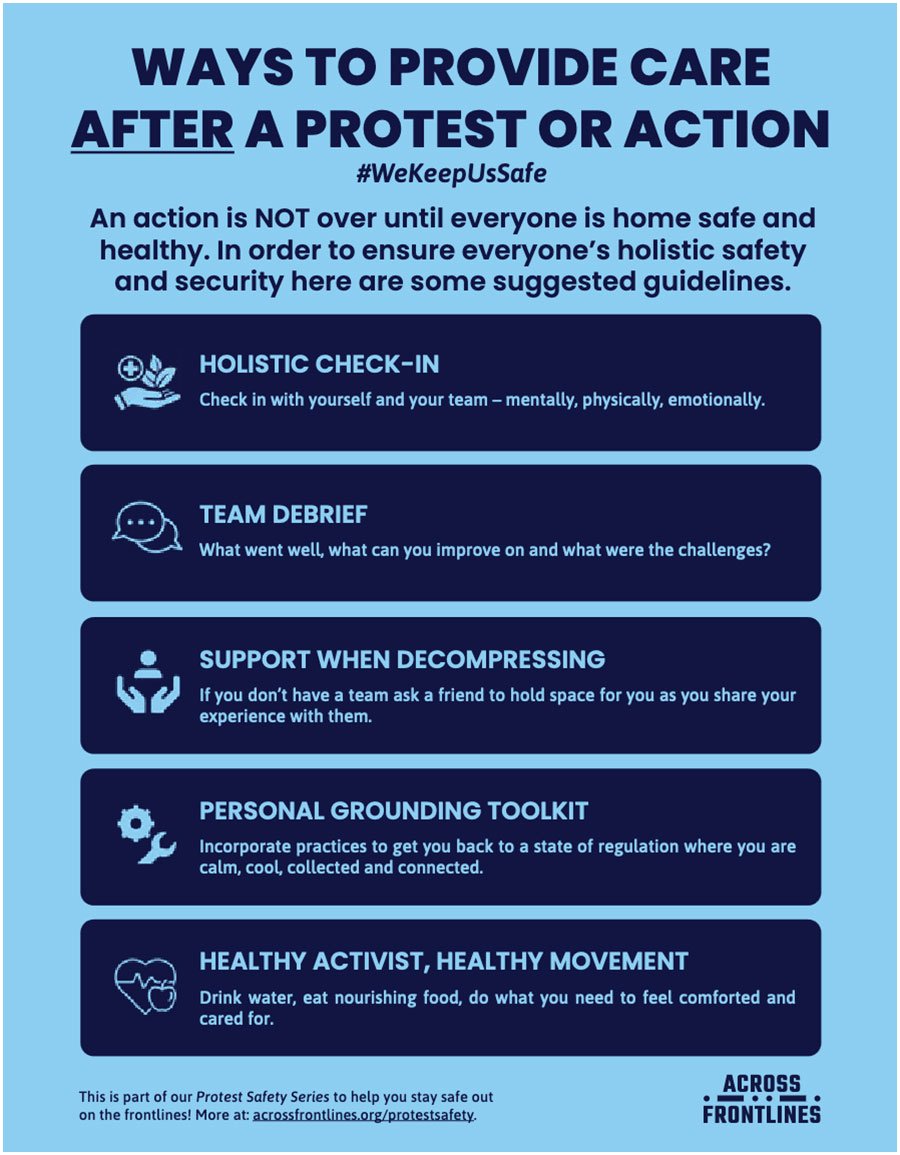
An action is NOT over until everyone is home safe and healthy. Here are some suggested guidelines to ensure everyone’s holistic safety and security.
Holistic Check-In
Check in with yourself and your team – mentally, physically, and emotionally.
Team Debrief
What went well, what can you improve on, and what were the challenges?
Support When Decompressing
If you don’t have a team, ask a friend to hold space for you as you share your experience with them.
Personal Grounding Toolkit
Incorporate practices to get you back to a state of regulation where you are calm, cool, collected, and connected.
Healthy Activist, Healthy Movement
Drink water, eat nourishing food, do what you need to feel comforted and cared for.
KNOW YOUR HUMAN RIGHTS AT A PROTEST OR ACTION

It’s important to know your rights, especially since we know that law enforcement often does not honor those rights.
Protection of the Right to Freedom of Assembly
Law enforcement must facilitate and not restrict a peaceful public assembly
Freedom from excessive use of force
In the policing of non-violent protests, police must avoid the use of force.
Right to Medical Assistance
If you are injured you have a right to medical assistance without delay.
Freedom from Arbitrary Arrest and Detention
If you are arrested you have a right to be told of the reason for your arrest, you also have the right promptly after your arrest to have access to a lawyer and to your family.
Right to Complain
If your rights have been violated you have a right to file a complaint and to be provided information on how to do so.
If you feel your rights are being violated:
Make sure to state “I do not consent…”
Document everything! Film, photograph, or write down in as much detail as you can.
Call the National Lawyers Guild Legal Support Hotline. Look up the phone number for your location here: nlg.org/massdefenseprogram/
WAYS TO PROVIDE CARE AFTER A PROTEST OR ACTION

An action is NOT over until everyone is home safe and healthy. Here are some suggested guidelines to ensure everyone’s holistic safety and security.
Do Not Rub It In
Decontaminate your hands before you touch any part of your body.
Protect Yourself
Gas masks provide the best facial protection, if properly fitted and sealed. Alternatively, goggles, respirators, or a wet bandana over the nose and mouth will help.
Stay Calm
What went well, what can you improve on, and what were the challenges?
Clear Out, Clean Out
If you don’t have a team, ask a friend to hold space for you as you share your experience with them.
Remove your Contact Lenses
Incorporate practices to get you back to a state of regulation where you are calm, cool, collected, and connected.
Flush Your Eyes
Drink water, eat nourishing food, do what you need to feel comforted and cared for.